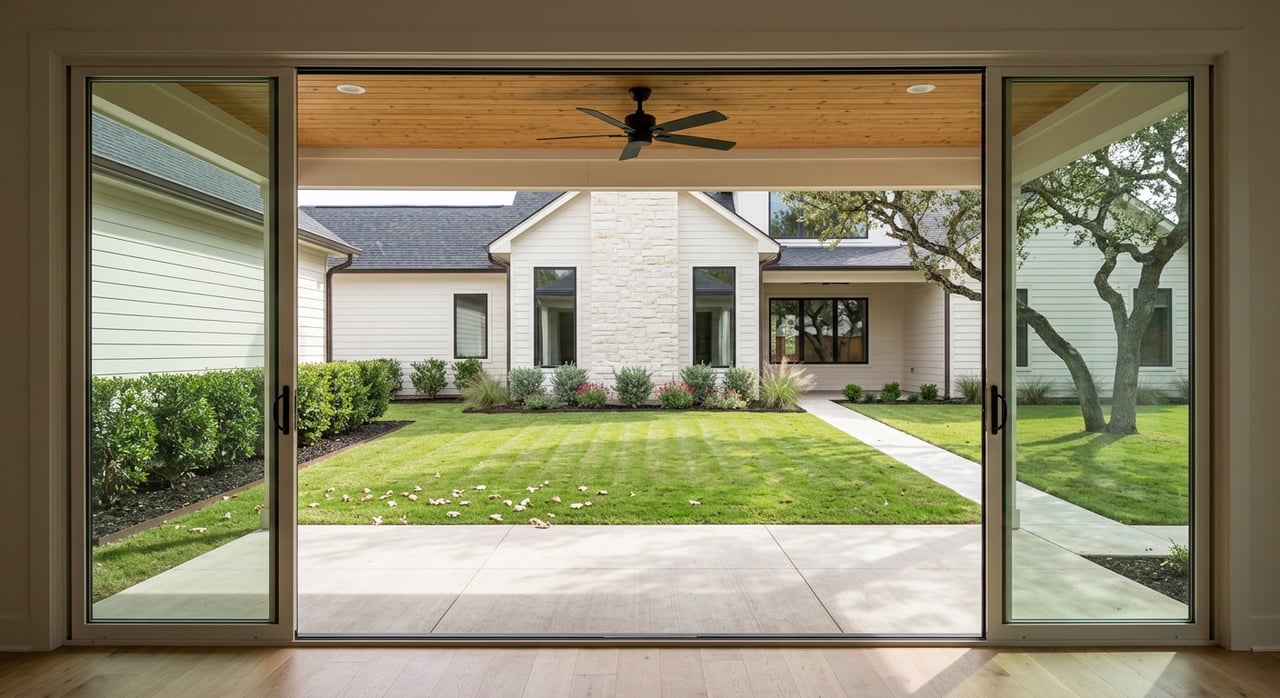
Liberty Hill Vs Closer-In Suburbs: Commute And Lifestyle Tradeoffs
July 23, 2026
July 23, 2026
Wondering if moving farther out is worth it? If Liberty Hill keeps showing up on your search, you’re probably weighing a familiar tradeoff: more space and a lower home value versus a longer commute and fewer nearby conveniences. The good news is that this decision gets much easier when you compare the day-to-day reality, not just the map. Let’s dive in.
Liberty Hill sits on the outer edge of the northern Austin growth corridor. The city places itself about 35 miles north of downtown Austin, 15 miles from Cedar Park, 18 miles from Georgetown, and 8 miles from Leander.
That location matters because Liberty Hill is not a closer-in suburb in the same way Leander, Cedar Park, or Round Rock are. It gives you more separation from the core suburban ring, which often translates into a quieter feel and a little more breathing room.
Liberty Hill is still relatively small by Austin-metro standards. The Census Bureau estimates its 2024 population at 11,984, and its population density is 786.8 people per square mile.
That lower density helps explain why Liberty Hill can feel less crowded than many other Austin-area options. For some buyers, that is a major plus. For others, it can mean more driving for work, errands, and activities.
If you work in or near Austin, commute time is often the first thing to study. Census data shows Liberty Hill’s mean travel time to work is 34.1 minutes.
That is longer than several closer-in options. Leander comes in at 29.2 minutes, Georgetown at 28.2, Cedar Park at 25.5, Round Rock at 24.9, and Austin at 23.7.
In simple terms, Liberty Hill’s average commute is about 5 minutes longer than Leander and roughly 9 to 10 minutes longer than Cedar Park or Round Rock. That may not sound huge on paper, but over a week, those extra minutes can add up.
If you commute every day, that difference can affect your schedule, energy, and flexibility. If you work hybrid, remote, or travel into Austin only occasionally, Liberty Hill may feel much more manageable.
A longer commute is usually easier to accept when your schedule gives you breathing room. Buyers who work from home part of the week or do not need to drive into central Austin daily may feel that the tradeoff is worth it.
It can also make sense if your top priorities are space, lower density, and a quieter setting. In that case, you may decide the extra drive is a fair exchange for how you want to live at home.
If you need frequent access to Austin employers, regular appointments, or a tighter daily routine, the closer-in suburbs often provide a smoother experience. A shorter average commute can help simplify school drop-offs, errands, and after-work plans.
Leander, Cedar Park, Round Rock, and Georgetown often make more sense for buyers who want to reduce drive time without moving into Austin itself. They can offer a middle ground between access and space.
Transit is another area where moving closer in can change your experience. Liberty Hill does have regional transit service through CARTS, and the Interurban Coach links Liberty Hill to Austin International Airport, Austin, Georgetown, Round Rock, San Marcos, and other regional destinations, with a connector into Austin via Grasshopper.
That said, Liberty Hill’s transit network is not as dense or frequent as what you will find in some closer-in suburbs. For many households, daily life there still works best with a car.
Leander offers CapMetro bus and rail service, including the Red Line and MetroExpress to downtown Austin and the UT campus. Round Rock offers Round Rock Rides plus CapMetro routes into Austin, while Cedar Park’s LiNK microtransit connects riders to Lakeline Station and the larger regional network.
If having multiple ways to get around matters to you, those suburbs may offer more flexibility. If you are comfortable driving and use transit only occasionally, Liberty Hill may still fit well.
For many buyers, Liberty Hill becomes attractive because of the housing pattern. The city’s land-use guidance supports a 70% single-family and 30% multifamily residential balance, and local zoning still leans toward detached homes and larger lots.
For example, Liberty Hill’s zoning code sets a 30,000-square-foot minimum lot area for SF1 low-density residential lots and a 120,000-square-foot minimum for agricultural lots, with more compact options in higher-density districts. That tells you a lot about the type of built environment the city has historically supported.
By contrast, Austin has moved toward much smaller-lot housing options, including small-lot single-family development on lots as small as 1,800 square feet. Closer-in suburbs also tend to offer a more mixed housing stock, even when single-family homes remain the majority.
Leander’s planning documents say detached single-family homes make up 93% of the housing stock, but the city also includes townhomes, condos, multifamily homes, and assisted living. Cedar Park’s future land-use plan also keeps traditional single-family housing as the main pattern while planning for townhomes and apartments.
Liberty Hill’s lower density is visible in the numbers. Its population density is 786.8 people per square mile, compared with 1,578.6 in Leander, 3,042.5 in Cedar Park, 3,174.0 in Round Rock, and 3,006.4 in Austin.
In practical terms, that can mean fewer crowded corridors, a more open feel, and neighborhoods that feel less tightly packed. For buyers leaving denser parts of Austin, that difference may be one of Liberty Hill’s strongest lifestyle draws.
Budget is usually where this conversation gets real. The Census Bureau reports Liberty Hill’s median owner-occupied home value at $403,200.
That is below Leander at $506,200, Cedar Park at $513,600, and Austin at $555,300. It is also somewhat below Round Rock at $418,600 and Georgetown at $429,100.
This is why Liberty Hill often comes up in conversations about getting more space for the money in the northern Austin corridor. Buyers who feel stretched by closer-in prices may find Liberty Hill gives them more room to work with.
That does not automatically make it the best choice. It simply means you are often trading some convenience for a better value position and a more spread-out setting.
Liberty Hill does offer a local base of restaurants, boutiques, healthcare, schools, and civic services. The city also notes healthcare services, urgent care, 24-hour EMS, and that St. David’s Emergency Center in Leander is less than 10 minutes away, with additional hospitals in Georgetown, Cedar Park, and Austin.
At the same time, Liberty Hill’s own planning materials make clear that many shopping trips still happen outside the city. That is an important reality check if you want lots of retail, dining, entertainment, or medical options close to home.
In other words, Liberty Hill can cover some daily needs, but it is not yet as fully built out as the closer-in suburbs. Many households will still rely on nearby cities for broader services and errands.
Leander, Cedar Park, and Round Rock generally offer more built-in convenience. Those cities highlight access to clinics, hospitals, shopping, transit, employers, and larger service networks.
Liberty Hill tends to fit buyers who are making a deliberate lifestyle choice, not just chasing a lower number. If you value space, lower density, and a quieter setting, Liberty Hill may feel like a strong match.
It can be especially appealing if you have a hybrid schedule, commute less often, or care more about your home environment than being close to every errand. For many first-time and move-up buyers, that balance can make sense.
Closer-in suburbs may fit better if your routine depends on frequent trips into Austin, easier access to transit, or more nearby services. If convenience is your top priority, Liberty Hill may feel like too much of a compromise.
If you are trying to make a smart decision, compare more than list price. A home that costs less but adds time and stress to your week may or may not be the better fit.
Here are a few questions to ask yourself:
When you answer those questions honestly, the right direction usually becomes clearer. The goal is not to find the “best” suburb on paper. It is to find the one that fits your real life.
If you are a first-time buyer, this is also where good guidance matters. Comparing Liberty Hill with Leander, Cedar Park, Georgetown, or Round Rock is easier when someone helps you break down the numbers, the commute tradeoffs, and the day-to-day lifestyle differences in plain English.
A clear plan can save you from buying too far out for your routine or paying more for proximity you may not truly need. That kind of practical comparison is what leads to better long-term decisions.
If you want help sorting through Liberty Hill versus the closer-in suburbs, Toni Delao can walk you through the tradeoffs, explain your options clearly, and help you choose a location that fits your budget, timing, and lifestyle.
Stay up to date on the latest real estate trends.

Turning today’s No into tomorrow’s YES! At YES Realty, we help clear the roadblocks to homeownership and give you real, practical resources so your next chapter comes with less stress and more confidence. With over 22 years of experience, Owner/Broker- Toni Thompson offers solutions like Lease Buyout, Rent-to-Own, and Buy‑Before‑You‑Sell strategies to help you move forward on your timeline.
14900 AVERY RANCH BLVD STE C200 AUSTIN, TX 78717