The Second Price Tag Hiding in Leander's New Neighborhoods
September 17, 2026
September 17, 2026
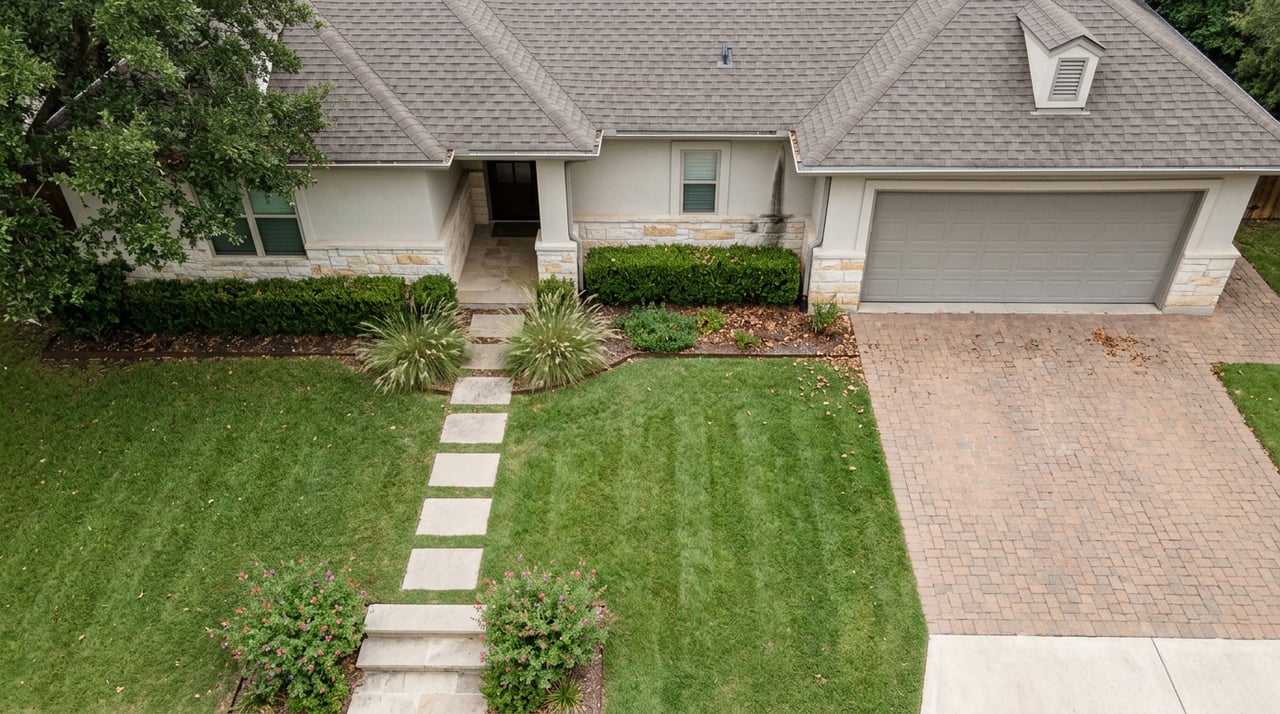
Two houses can sit less than a mile apart in Leander, list for the same $500,000, and carry annual property tax bills that differ by more than $1,500. Same builder grade, same school district, same zip code. The gap has nothing to do with the house. It comes down to a line item that never shows up in a listing photo: the Municipal Utility District tax, known locally as a MUD, that finances the water, sewer, and drainage running under the newer half of town.
In 2026, that single line item is doing more to separate one part of Leander from another than granite counters ever could.
If you've been watching Leander's median price this year, you've probably noticed it depends entirely on which site you're looking at. Redfin put the median sale price at $421,000 over the three months ending July 2026, down less than one percent from a year earlier. Zillow's home value index for the same city showed a much steeper year-over-year decline, into double digits. Orchard's 30-day snapshot landed closer to $415,000, also down sharply from last year.
None of these sources are wrong. They're measuring a market where entry-level product in newer sections and $600,000-plus homes in Travisso are closing in the same month, pulling the median in different directions depending on which homes happen to sell that week. The lesson isn't which number to trust. It's that the sticker price, whichever version you're looking at, was never going to tell you what you'll actually carry every month after closing. That number lives in the tax bill, and in Leander, the tax bill depends heavily on which side of a MUD boundary your address falls on.
Crystal Falls is the clearest example, because it isn't one tax situation, it's several wearing the same name. Sections built before 2005 were developed before the MUD financing structure took hold in that part of town, and many carry no MUD tax at all. Sections built after 2015 fall under MUD #15, and the added assessment pushes their combined effective rate noticeably higher than their older neighbors just a few streets away.
Across Williamson County generally, the effective property tax rate runs somewhere between 1.9 and 2.4 percent of appraised value once you combine city, county, and school district levies. A MUD adds another 0.3 to 0.7 percentage points on top of that, and in the early years of a new district's bond schedule, some bills climb above 2.7 percent. On a $500,000 home, that range alone accounts for the $1,500-plus swing buyers run into when they compare two Crystal Falls addresses side by side.
Here's roughly how that plays out across Leander's better-known communities:
| Community | MUD or PID status | Approximate combined rate (2026) | What the tax is financing |
|---|---|---|---|
| Block House Creek | No MUD | ~2.18–2.30% | Established infrastructure, Cedar Park's lower city rate, Leander ISD |
| Crystal Falls, original sections (pre-2005) | No MUD | ~2.18–2.30% | Mature trees, paid-off infrastructure, decades of resale history |
| Crystal Falls, newer sections (MUD #15) | MUD | ~2.2–2.5% | Same golf course access, newer construction |
| Travisso | Modest MUD for its tier | ~2.3–2.5% (estimated) | Hill Country lots, luxury product starting near $600K |
| Bryson | Higher MUD, newer infrastructure | up to ~2.57% | Resort pool, fitness center, dog park |
| Northline (TODD MUD) | MUD financing transit infrastructure | ~2.52% (2026 estimate) | Walkable retail, MetroRail-adjacent townhomes |
These are ranges, not promises. The only way to confirm a specific address is to pull it up directly with the Williamson Central Appraisal District, but the pattern holds across nearly every source: the newer the infrastructure, the higher the tax rate tends to run, at least for a while.
That "for a while" matters more than most buyers realize. MUD taxes aren't fixed. They exist to pay off the bonds a developer issued to build the water and sewer lines before the city extended its own system out that far. As homeowners pay down that debt year after year, the rate declines. A MUD created between 2015 and 2020 with an initial rate near 0.55 percent may have already dropped closer to 0.40 percent by 2026, and could fall to around 0.20 percent by 2030. Some districts eventually dissolve entirely, folding into the city's utility system once the bonds are retired.
That helps explain why Block House Creek and the original Crystal Falls sections carry little or no MUD tax today: their established infrastructure is not tied to the newer districts still paying down bonds. They aren't less desirable; their tax bills reflect a different stage of development.
Northline carries one of the higher combined rates in the city for a specific reason: its MUD is financing the infrastructure behind Leander's first real downtown district, built around the Capital MetroRail station at the northern end of the Red Line. The city has already moved several pieces of that vision from rendering to reality. Initial townhome and multifamily construction is complete, an 85,000 square foot retail phase led by Austin-based Endeavor Real Estate Group is under construction along the 183A frontage, and in February 2026 the Leander City Council approved an economic development agreement to bring a 95,000 square foot office building and future city hall functions into the district, according to reporting in the Austin American-Statesman.
For a household that actually uses the Red Line, that tax premium buys something concrete: a walk to the platform instead of a daily toll. For a household that still drives, the 183A toll adds roughly $5 to $8 a day round trip on top of the higher tax bill, a cost that Bryson or Crystal Falls commuters headed the same direction would also pay, just without the walkable retail. Neither trade-off is a mistake. They're two different bets on how you'll actually get to work, and the tax rate is the price of whichever bet you're making.
The fix here isn't complicated, it just requires looking past the price tag before you fall in love with a floor plan.
Does a MUD tax ever go away completely? Yes. Once the bonds that created it are paid off, the district's rate falls to zero or the district dissolves into the city's own utility system.
Is Northline's rate the highest in Leander right now? Not necessarily. Bryson's newer infrastructure carries a comparably high rate, and both sit within the range that newer Crystal Falls phases and parts of Travisso also occupy.
I already closed in a MUD neighborhood this year. Is there anything to do now? The 2026 protest window has already closed for most homeowners. The useful move is to file your homestead exemption if you haven't, and put next spring's protest deadline on your calendar so you're ready the moment WCAD mails your next notice.
The house is only half the number. The other half shows up every October in a bill that depends on which side of a boundary line your driveway happens to sit. Whether that trade favors Bryson's amenities, Crystal Falls' established shade, or Northline's walk to the train depends entirely on how you actually plan to live in the house, not just what it costs to buy it.
If you're comparing specific Leander neighborhoods and want the tax picture pulled for an actual address before you make an offer, YES Realty can walk through the numbers with you. Schedule a free consultation and get the real math, not just the median.
This article is general information, not legal, tax or financial advice. Consult a qualified professional about your situation.
Stay up to date on the latest real estate trends.


Turning today’s No into tomorrow’s YES! At YES Realty, we help clear the roadblocks to homeownership and give you real, practical resources so your next chapter comes with less stress and more confidence. With over 22 years of experience, Owner/Broker- Toni Thompson offers solutions like Lease Buyout, Rent-to-Own, and Buy‑Before‑You‑Sell strategies to help you move forward on your timeline.
14900 AVERY RANCH BLVD STE C200 AUSTIN, TX 78717