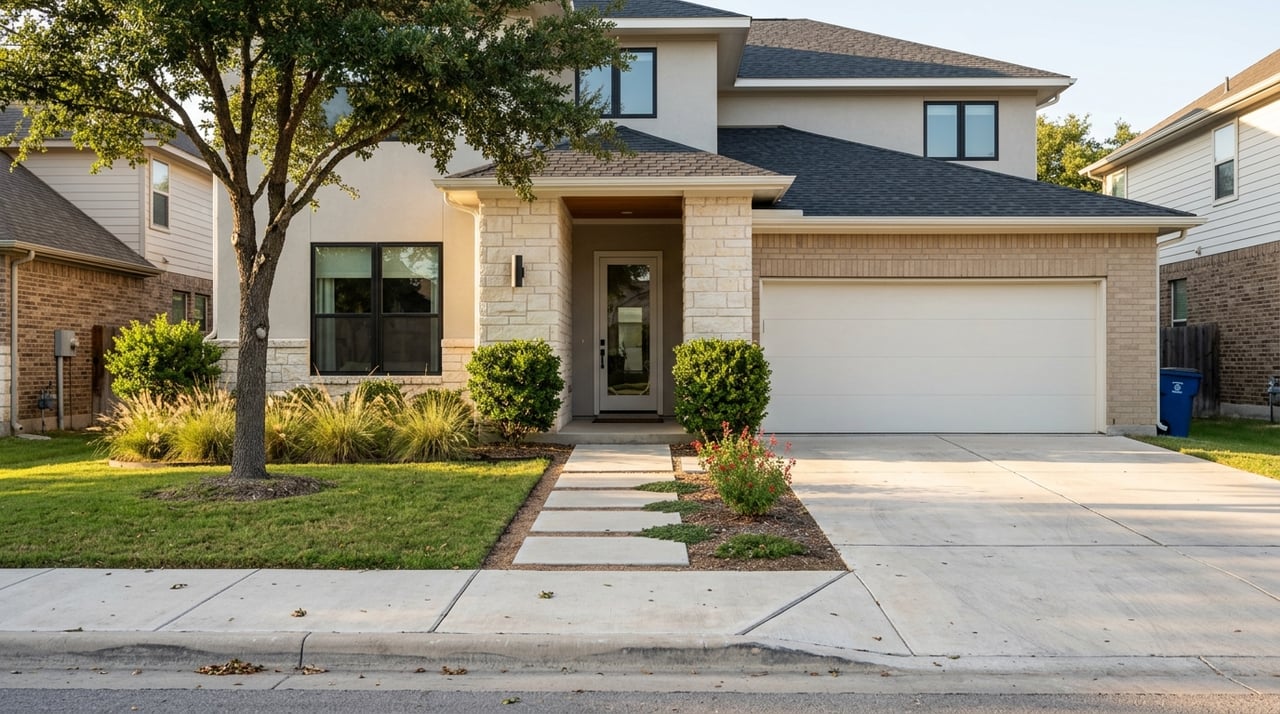
Leander vs Nearby Suburbs Homes for Today’s Buyers
May 7, 2026
May 7, 2026
Choosing the right suburb can feel harder than choosing the house itself. If you are comparing Leander, Cedar Park, Round Rock, and Georgetown, you are probably trying to balance price, commute, home style, and everyday convenience without overpaying or giving up too much. The good news is that each city brings a distinct advantage, and Leander stands out in a very specific way. This guide breaks down how Leander compares so you can make a smarter, more confident decision. Let’s dive in.
Leander sits in a sweet spot for many buyers. Based on Redfin’s March 2026 market snapshot, the median sale price in Leander was about $411,000, which puts it almost even with Georgetown at about $412,500, above Round Rock at about $367,500, and below Cedar Park at about $496,000.
That pricing matters if you want a suburb that still feels accessible compared with some nearby options. Leander is not the lowest-price choice in this group, but it often gives you a newer-suburban feel and more space while staying below Cedar Park’s price point.
Here is the simplest way to think about this comparison: Leander tends to offer value plus newer-home feel, Cedar Park leans premium convenience, Round Rock leans lower entry price and larger city scale, and Georgetown leans historic character.
| Suburb | Median Sale Price | Days on Market | Key Buyer Trade-Off |
|---|---|---|---|
| Leander | $411,000 | 97 | Value plus newness and commute flexibility |
| Cedar Park | $496,000 | 53 | Higher cost for close-in convenience and amenities |
| Round Rock | $367,500 | 72 | Lower entry price with a larger city feel |
| Georgetown | $412,500 | 96 | Similar pricing to Leander with more historic character |
Price is only part of the story, but it helps frame the rest of the decision. Once you know where each city sits, you can compare what you may be getting for your money.
If you are deciding between Leander and Cedar Park, the clearest difference is cost. Cedar Park’s median sale price was about $496,000 compared with Leander’s $411,000, and Cedar Park also had the highest price per square foot in this group at $228 versus Leander’s $197.
That gap suggests Cedar Park commands a premium for its location and local amenity package. For buyers who want to stay closer in and are comfortable paying more, Cedar Park may feel worth it. For buyers who want to protect their budget while still targeting a suburban setting, Leander can look more practical.
Cedar Park offers a strong city-supported amenity package. The city reports about 46 city-maintained parks, roughly 1,000 acres of city-owned parkland, 34 miles of trails, and the H-E-B Center, an 8,700-seat venue for sports and events.
That creates a more built-out, polished suburban feel. If your top priority is having a wide range of parks, trails, entertainment, and regional access nearby, Cedar Park stands out.
Leander and Cedar Park both offer transit access, but Leander has a particularly strong flexibility story. Leander’s official transportation information notes CapMetro bus and rail service, including the Leander Station Park and Ride, MetroRail Red Line service six days a week, and MetroExpress 985 into downtown Austin and the UT campus using the MoPac Express Lanes.
Cedar Park also offers regional access, including Metrorail and LiNK Cedar Park microtransit connecting riders to Lakeline Station. If rail access matters to you, both are worth a close look, but Leander’s station-based setup and highway access can be especially appealing for buyers who want more than one commute option.
Round Rock is the budget-friendly option in this comparison. Its median sale price was about $367,500, which is lower than Leander’s $411,000. Its price per square foot was also slightly lower at $195 compared with Leander’s $197.
If your main goal is the lowest median price among these four suburbs, Round Rock deserves attention. But if you are trying to balance price with a newer-suburban feel, Leander may still offer the better fit.
Round Rock feels larger in both size and identity. The city reports roughly 141,000 residents and highlights a downtown master plan built around retail, dining, entertainment, residential, and public spaces in a walkable setting. It also has 37 developed parks spanning more than 2,305 acres, including Old Settlers Park at 670 acres.
That broader city scale can be a plus if you want more variety and a bigger-city rhythm. Leander, by contrast, can feel more focused on newer suburban growth patterns, with inventory and neighborhood references that point to communities like Crystal Falls, Travisso, Mason Hills, and Santa Rita Ranch.
Round Rock is more highway-oriented. The city emphasizes Round Rock Rides and CapMetro route connections into Austin, but it is less rail-centered than Leander.
If you expect to drive most of the time, Round Rock may work well. If you want a mix of highway access and rail service, Leander has an edge.
Leander and Georgetown are very close on price. In March 2026, Leander’s median sale price was about $411,000 and Georgetown’s was about $412,500, so this is not really a budget comparison.
Instead, this choice is more about lifestyle and setting. Leander tends to appeal to buyers who want a newer suburban environment and flexible commuting options, while Georgetown stands out for historic character and a more traditional town-center identity.
Georgetown has a distinct historic center shaped by its downtown and Old Town planning overlays. City materials describe the Williamson County Courthouse Historic District as the public square and the commercial and cultural heart of the city.
That gives Georgetown a different feel from Leander’s neighborhood mix, which points more toward newer master-planned communities and suburban housing options. If you are drawn to historic town-center charm, Georgetown is the clearest contrast to Leander.
Georgetown appears to be the most car-oriented of the four cities in this comparison. Redfin’s walk score places Georgetown at 23, compared with Leander at 28, and the overall data suggests a more driving-centered daily routine.
Leander is still car-dependent, but its rail and express bus options can add flexibility that Georgetown does not emphasize in the same way. If your schedule depends on having more than one commute choice, that difference matters.
Leander’s biggest strength is balance. It is priced close to Georgetown, noticeably below Cedar Park, and supported by both rail and highway options that can make commuting more flexible than in a purely highway-based suburb.
It also appears to offer a wide range of housing types. Recent sales and neighborhood references suggest options ranging from attached two-bedroom homes to larger five-bedroom homes, which can help if you are buying your first home, moving up, downsizing, or relocating for more space.
That makes Leander especially appealing if you are looking for:
The right answer depends on what you need most in the next few years, not just what looks best on paper today. A lower price, shorter drive, newer home, or stronger amenity package can all be the right choice depending on your budget, routine, and long-term plan.
A practical way to narrow it down is to ask yourself these questions:
If you are a first-time buyer or moving from Austin to gain space, Leander often lands in the middle of the Venn diagram. It can offer a practical mix of price, newer inventory, and transportation flexibility without jumping into Cedar Park pricing.
Leander compares well because it does not try to be everything to everyone. It offers a clear value story for buyers who want a modern suburban setting, room to grow, and more commute flexibility than some nearby alternatives.
Cedar Park may win on close-in convenience. Round Rock may win on lower median price. Georgetown may win on historic identity. But Leander often wins on balance, and for many buyers, that is exactly what makes it worth a serious look.
If you want help comparing Leander to Cedar Park, Round Rock, Georgetown, or other Austin-area suburbs based on your budget, commute, and timing, Toni Delao can help you build a clear, practical plan.
Stay up to date on the latest real estate trends.
Turning today’s No into tomorrow’s YES! At YES Realty, we help clear the roadblocks to homeownership and give you real, practical resources so your next chapter comes with less stress and more confidence. With over 22 years of experience, Owner/Broker- Toni Thompson offers solutions like Lease Buyout, Rent-to-Own, and Buy‑Before‑You‑Sell strategies to help you move forward on your timeline.
14900 AVERY RANCH BLVD STE C200 AUSTIN, TX 78717