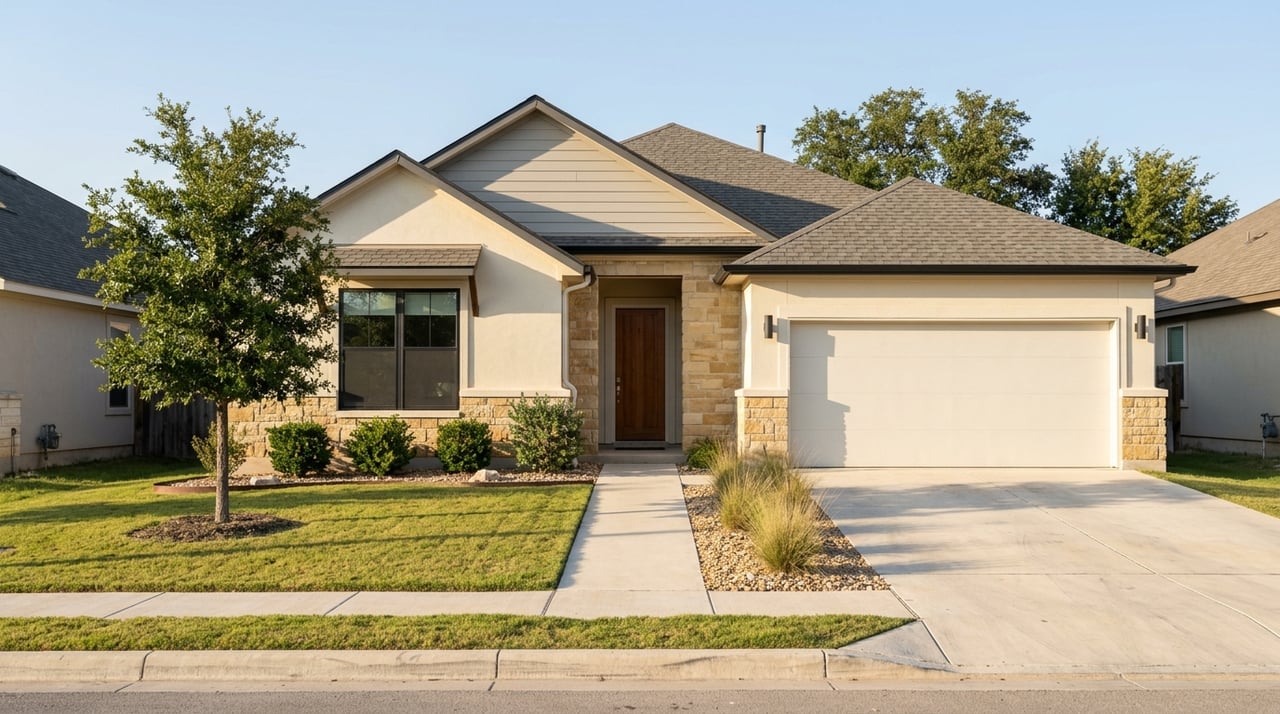
Is Liberty Hill Right For Your Next Home Move?
April 16, 2026
April 16, 2026
If you are thinking about trading a tighter Austin-area footprint for more space and a different pace, Liberty Hill is probably already on your radar. It has been growing quickly, and for many buyers, that growth signals opportunity as much as change. The real question is not whether Liberty Hill is popular, but whether it fits your budget, commute, and day-to-day life. Let’s dive in.
Liberty Hill sits in Williamson County at the intersection of State Highways 29 and 183, about 33 miles northwest of Austin, according to the City of Liberty Hill comprehensive plan. That location gives you access to regional routes while placing you in a part of the metro that still leans into Hill Country character.
The city has also grown fast. U.S. Census QuickFacts estimates Liberty Hill had 11,984 residents in July 2024, up from 3,646 at the 2020 census. That kind of growth usually means more housing choices, more development activity, and more buyers trying to figure out whether getting in now makes sense.
If you are hoping for a dense, convenience-first, urban setup, Liberty Hill may not be your best fit. If you want more breathing room, newer housing options, and a community that still feels connected to a historic downtown, it may be worth a closer look.
The city highlights rolling hills, local restaurants, unique boutiques, and a growing downtown vision. You can explore local amenities through the city’s Shop and Dine page, and the downtown area is also evolving under a master plan adopted in July 2024.
Another lifestyle point that stands out is Liberty Hill’s outdoor and Hill Country identity. The city notes its rolling terrain and also reports that Liberty Hill became the first International Dark Sky Community in Williamson County in July 2025. For many buyers, that adds to the appeal of a place that feels a little more removed from the constant glow and pace of the urban core.
Liberty Hill tends to attract buyers who are looking for more home or a newer home, not just a shorter commute. That is an important distinction because it helps frame the value proposition more clearly.
According to the 2020-2024 ACS profile, the owner-occupied housing rate is 60.7%, the median owner-occupied home value is $403,200, and median monthly owner costs with a mortgage are $2,440. The same source lists median household income at $115,096, which gives useful context for how local housing costs line up with area incomes.
Current listing activity also shows Liberty Hill as an active market. Realtor.com’s Williamson County market page lists Liberty Hill with a median listing price of $528,990 in February 2026, 1,285 homes for sale, and a median of 71 days on market. That same page categorized Williamson County as a buyer’s market, which can matter if you want more negotiating room or more time to compare options.
Liberty Hill is not best understood as a built-out urban environment with a fixed housing mix. It is better understood as a growing city where planned neighborhoods and subdivision development play a major role.
The city’s Planning and Zoning Commission page explains that subdivision matters are handled within the city limits and ETJ, and the LHTX 2040 planning effort guides future growth, development, and investment. For you as a buyer, that means your search may focus more on newer neighborhoods, builder inventory, and long-term growth patterns than on older established housing stock.
That can be a real advantage if you want modern layouts, newer systems, and communities still taking shape. It also means you should be ready for nearby construction, changing traffic patterns, and the reality that some parts of Liberty Hill will feel more finished than others.
One of the biggest questions about Liberty Hill is simple: how far is too far for your routine? The answer depends less on mileage and more on how often you need to be on the road.
The U.S. Census commute data estimates mean travel time to work at 36.4 minutes. That does not mean every commute will look the same, but it does reinforce that Liberty Hill is generally a better fit for buyers who are comfortable with a car-based lifestyle, work remotely, or have a hybrid schedule.
Regional connections are still important here. The city notes that U.S. 183 and State Highway 29 connect Liberty Hill to surrounding markets, and its public transportation information says the Interurban Coach links Liberty Hill with Austin, Georgetown, Round Rock, Austin-Bergstrom International Airport, and other Central Texas destinations. CARTS community transit also offers curb-to-curb service, though ride times may vary.
Liberty Hill offers day-to-day conveniences, but not at a big-city scale. That is not necessarily a downside. For many households, it is part of the reason the area feels appealing.
The city points to restaurants, boutiques, community gathering spaces, and the public library, which offers more than 15,000 books plus programs like weekly story time and summer reading. The Water Tower Parking Lot across from Wetzel Park also serves as both parking and event space, reinforcing the community-centered feel of downtown.
If you are comparing Liberty Hill with closer-in suburbs, this is a helpful mindset shift: you are usually choosing space and lifestyle first, then weighing whether the convenience trade-off works for you.
If school attendance boundaries are part of your move, verify them carefully for any address you consider. Liberty Hill ISD serves more than 10,500 students and families across 13 campuses and covers about 100 square miles in western Williamson County.
According to the district website, that includes two high schools, two middle schools, seven elementary schools, and an alternative campus, with campuses spanning parts of Liberty Hill, Georgetown, and Leander. Because district and campus assignments can change, it is smart to confirm details directly before making a final decision.
One of the most practical Liberty Hill issues is also one of the easiest to overlook. Not every address uses City of Liberty Hill water or sewer service.
The city’s new customer utility page makes clear that utility provider information should be verified by address. That matters when you are comparing monthly costs, service setup, and long-term reliability.
There is also a broader water planning story to know. The city notes Phase 1 water restrictions took effect January 21, 2025, and it describes Pure Water LHTX as a project intended to improve supply reliability and reduce reliance on Lake Travis. If you are buying in a fast-growing Hill Country area, those are exactly the kinds of details worth understanding up front.
Liberty Hill tends to make the most sense for buyers who want more space, newer housing options, and Hill Country character, while accepting a longer or more car-dependent routine. It can also be a strong option if you are relocating within the Austin metro and trying to stretch your budget differently than you can in closer-in neighborhoods.
It may be especially worth a look if you are:
On the other hand, Liberty Hill may be harder to love if you need an inner-Austin commute several days a week, want a highly walkable daily routine, or prefer an area with little active development around you.
Before you decide whether Liberty Hill is right for your next move, ask yourself a few honest questions:
Those answers usually tell you more than hype ever will.
Liberty Hill is not automatically the right move for everyone, but it can be a very smart move for the right buyer. If your priorities are space, newer housing, Hill Country setting, and a community that is still growing into its future, it deserves serious consideration. If convenience and short commute times are your top priorities, you may want to compare it carefully with closer-in options before making a leap.
The best next step is to match the area to your real budget, schedule, and goals, not just the listing photos. If you want help comparing Liberty Hill with other Austin-area options, building a realistic plan, or navigating new construction and timing questions, connect with Toni Delao for clear guidance and a strategy that fits your next move.
Stay up to date on the latest real estate trends.
Turning today’s No into tomorrow’s YES! At YES Realty, we help clear the roadblocks to homeownership and give you real, practical resources so your next chapter comes with less stress and more confidence. With over 22 years of experience, Owner/Broker- Toni Thompson offers solutions like Lease Buyout, Rent-to-Own, and Buy‑Before‑You‑Sell strategies to help you move forward on your timeline.
14900 AVERY RANCH BLVD STE C200 AUSTIN, TX 78717